Reflections from ISCRAM 2026: Sovereign AI, Healthcare Standards, and the Language of Resilience
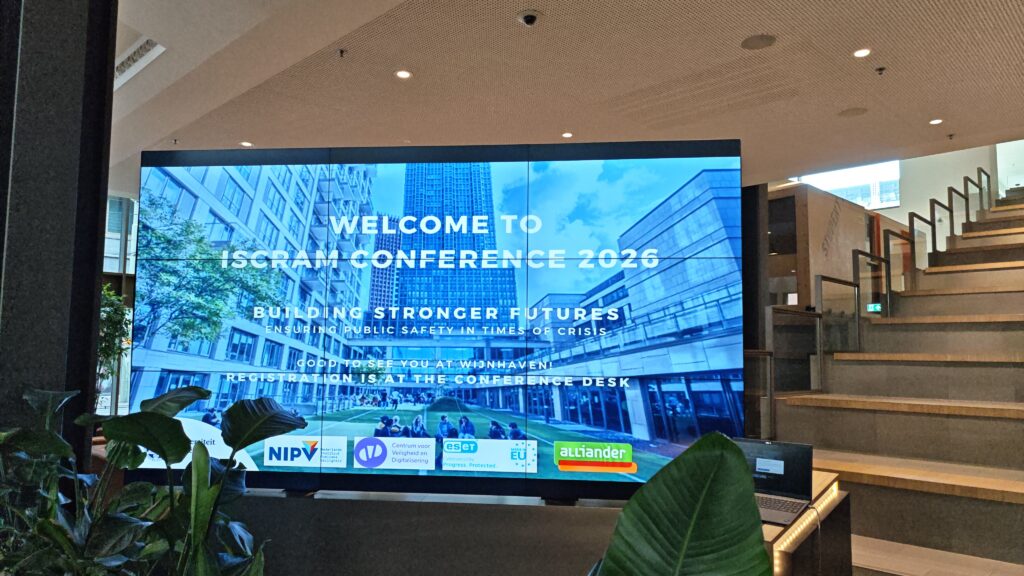
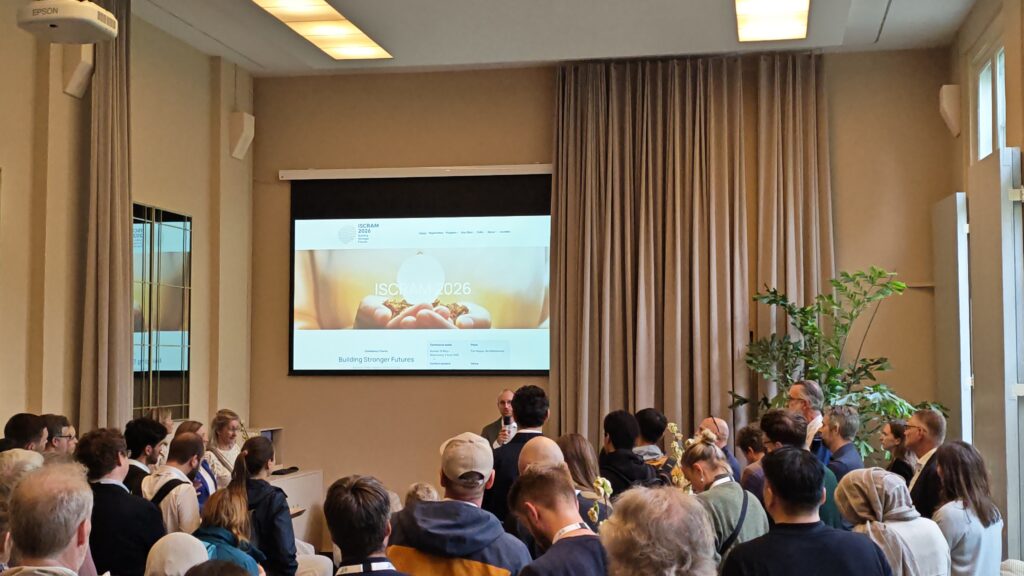
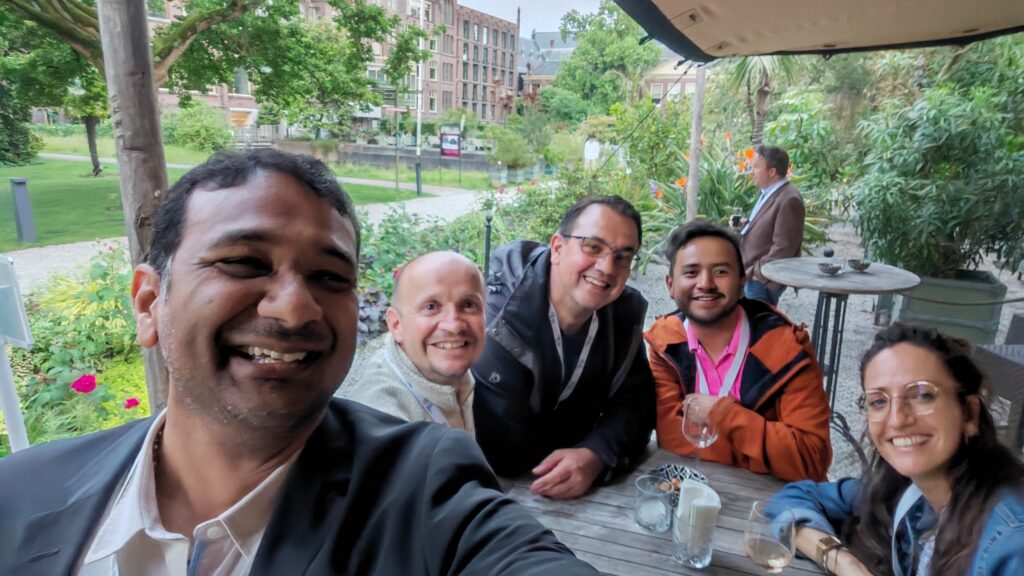
The 2026 International Conference on Information Systems for Crisis Response and Management (ISCRAM 2026) brought together researchers, practitioners, and end-users in The Hague to address one of the defining questions of our time: how do we build stronger futures by ensuring public safety in times of crisis? For Venaka TReLeaf, it was a valuable opportunity to present our work, engage with the community, and take stock of where the field is heading.
Presenting ESCORT: Healthcare Standards for Data Sovereignty
We presented our work on the ESCORT healthcare platform — specifically the architecture for AI-enabled healthcare services during cross-border medical emergencies and regular patient services. The presentation focused on how communication standards, particularly HL7 FHIR R4, can be leveraged not just for interoperability but as a mechanism for protecting patient data sovereignty.
The core argument is straightforward: when healthcare data crosses institutional and national boundaries — as it inevitably does in emergency response — the standards governing that exchange must give users and service providers explicit control over what is shared, with whom, and under what conditions. This is not just a technical requirement; it is a governance one. The response from the audience confirmed that this resonates strongly with both the research community and the operational end-users who deal with these challenges daily.
The related publications and datasets are available on our NexusCare product page, including the ESCORT ACS and FHIR R4 synthetic datasets published on Zenodo.
Sovereign AI: A Recurring Theme
If there was one theme that surfaced repeatedly across sessions, panels, and corridor conversations, it was the demand for sovereign AI-first technologies. The crisis response community is acutely aware that reliance on third-party cloud AI services creates dependencies that may be untenable during the very scenarios these systems are designed for — natural disasters, infrastructure failures, cross-border emergencies where connectivity is degraded and data sensitivity is heightened.
The appetite for AI systems that can run on-premise, offline, and under full institutional control was unmistakable. This aligns directly with how we have built the Nexus suite — products like NexusScholar and NexusFlow are designed for fully local deployment precisely because the domains they serve cannot afford to depend on external infrastructure during operational stress.
Disaster Resilience: The State of the Art
Attending the conference sessions offered a window into the remarkable breadth of research being carried out in disaster resilience. From flood early-warning systems to wildfire resource allocation models, from post-earthquake damage assessment to pandemic logistics optimisation — the quality and operational relevance of the work presented was impressive. What struck me most was the increasing maturity of AI-driven approaches: these are no longer experimental pilots presented as future possibilities, but validated systems with real deployment evidence and measurable impact.
For Venaka, this reinforces our conviction that the gap between research and deployment is where the most important work happens — and where the Nexus suite is positioned to contribute. The research community is producing excellent methods; what is often missing is the engineering infrastructure to take those methods from paper to production. That is exactly the bridge we build.

Societal Resilience and the Language Gap
One of the standout presentations explored how language translation models fail to capture societal resilience — specifically, how the concept of danger is expressed and understood differently across languages and cultures. The research compared how danger is communicated in English versus Hindi, revealing that direct translation misses critical cultural context, urgency cues, and community-specific resilience knowledge.
This has profound implications for AI-powered crisis communication systems. A multilingual alert system that simply translates English-language warnings into other languages may produce grammatically correct output that is semantically misleading or culturally tone-deaf. True resilience requires AI systems that understand not just language but the socio-cultural context in which that language operates — who is being addressed, what they already know, what they fear, and how they are likely to respond.
For those of us building generative AI and NLP systems, this is a sobering reminder that technical accuracy is necessary but insufficient. The communities these systems serve are diverse, and the meaning of “danger” — and of “resilience” — is shaped by lived experience, not by training corpora.
Looking Ahead
ISCRAM 2026 reinforced several convictions that shape our work at Venaka: that sovereign, on-premise AI is not a niche preference but an operational necessity for crisis response; that communication standards are the foundation for trustworthy data exchange across institutional boundaries; that the research-to-deployment gap remains the critical bottleneck; and that cultural and linguistic context must be embedded into AI systems, not bolted on as an afterthought.
We are grateful for the opportunity to contribute to this community and look forward to continuing the conversations that started in The Hague. If any of the themes above resonate with your work, we would welcome the chance to explore collaboration — whether through Horizon Europe consortia, bilateral partnerships, or simply a conversation about where AI can make a real difference in crisis preparedness and response.
ISCRAM 2026 — The 23rd International Conference on Information Systems for Crisis Response and Management, themed “Building Stronger Futures: Ensuring Public Safety in Times of Crisis”, was held from 1–4 June 2026 in The Hague, The Netherlands.
Related publications: Floros, G. et al. (2026). AI Enabled Healthcare Services During Cross-Border Medical Emergency and Regular Patient Services (ESCORT project). ISCRAM 2026. Paper · Chandramouli, K. (2026). ESCORT: An Integrated Platform for Telemedicine and Resilient Healthcare Management. ISCRAM 2026.