Accelerating the Green Transition: Reflections from the GD-SO Final Event in Brussels
On 28 April 2026, the European Commission’s Green Deal Projects Support Office (GD-SO) held its final event — “Accelerating the Green Transition through Research and Innovation” — at Comet Louise in Brussels, bringing together over 300 policymakers, researchers, industry leaders, local authorities, and civil society representatives to take stock of what the €1 billion Horizon 2020 Green Deal Call has delivered and where its results go next.
As the technical lead of SILVANUS (H2020, GA 101037247), Venaka TReLeaf participated to showcase our contributions to climate-resilient forest management, network with fellow Green Deal project consortia, and identify new opportunities for collaboration as the portfolio’s results transition from funded projects to sustained operational impact.
73 Projects, One Coherent Portfolio
The GD-SO final event was notable for something relatively rare in EU research funding: it treated the 73 Green Deal Call projects not as isolated initiatives but as a thematically coherent portfolio — organised across five core transitions corresponding to the projects’ thematic working groups: Clean Energy, Food and Health, Climate and Biodiversity, Urban Environment and Mobility, and Knowledge and Citizens.
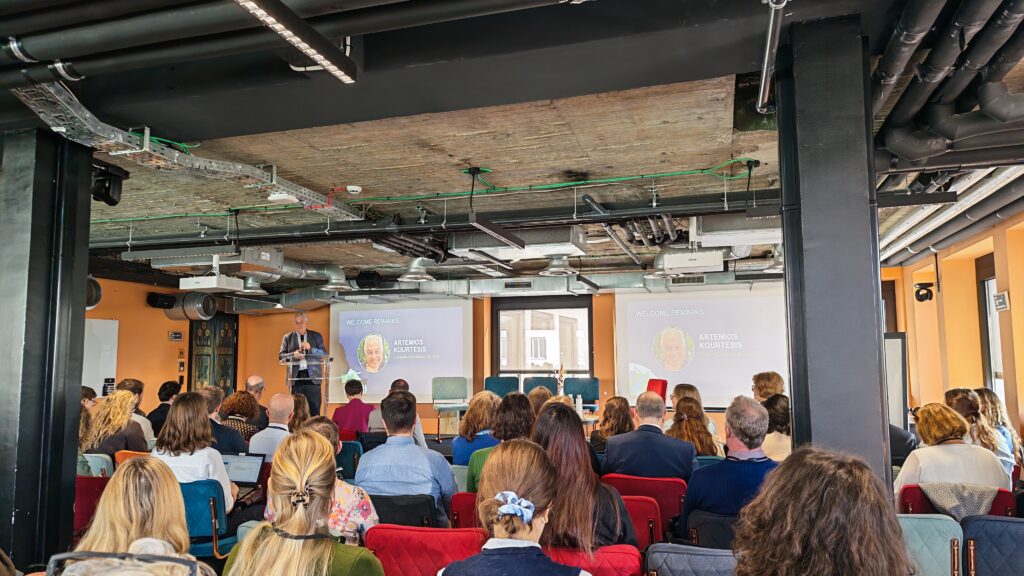
The opening plenary, with welcome remarks from Artemios Kourtesis of DG RTD, set the tone: these projects were funded not just to generate knowledge, but to produce solutions ready for real-world deployment. The question now is how to ensure their results are adopted, scaled, and embedded in the policies and investments that will shape Europe’s green future.
For SILVANUS, this framing resonated directly. Our work on wildfire resilience, forest resource monitoring, and biodiversity assessment has produced operational platforms — NexusAtlas for geospatial digital-twin intelligence and NexusEarth for Earth Observation analytics — that are designed precisely for this transition from project output to sustained capability.
Breakout Sessions: One Health, Low-Pollution Systems, and Citizen Engagement
The event featured three interactive breakout sessions that explored key dimensions of the green transition:
The One Health session examined how environmental, animal, and human health are interconnected — and how research projects are providing integrated approaches that break down the silos between these domains. This connects directly to our work: SILVANUS’s biodiversity monitoring capabilities, now productised as NexusBiome, and the precision agriculture pest management in NexusScout, both sit at the intersection of environmental health and food system resilience that One Health demands.
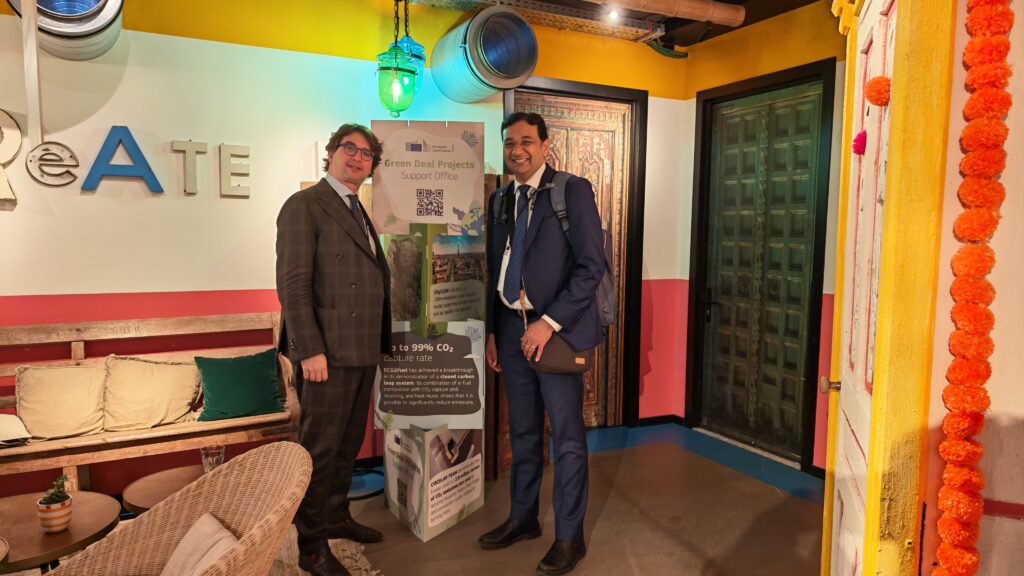
The session on pathways towards competitive and low-pollution systems showcased remarkable achievements across the portfolio — including CO₂ capture rates reaching up to 99%, a 100 MW renewable hydrogen electrolyser deployment, and renewable energy pilots generating over 110 MWh. These are not incremental improvements; they are European firsts that demonstrate the scale of ambition the Green Deal Call was designed to catalyse.
The citizen and societal engagement session reinforced a theme we encounter across all our work: technology adoption depends on public trust, participation, and co-design. The most technically sophisticated monitoring platform is useless if communities do not engage with it, contribute to it, or trust its outputs. Our citizen-science approach in NexusBiome — where public engagement simultaneously builds environmental awareness and structured biodiversity data — exemplifies the kind of dual-value design this session advocated.
SILVANUS at the Green Deal Portfolio
SILVANUS sits within the Climate and Biodiversity working group — one of the most operationally urgent tracks in the Green Deal portfolio. The project has developed and validated an integrated platform for climate-resilient forest management, combining wildfire risk assessment, forest resource monitoring, biodiversity analytics, and multi-agency coordination across European pilot sites.
As technical lead, Venaka TReLeaf is responsible for the AI/ML capabilities that power SILVANUS’s analytical engine — the same capabilities now available as part of the Nexus product suite:
- NexusAtlas — the geospatial digital-twin platform providing the multi-layered GIS visualisation, 3D rendering, and decision-support overlays developed and matured in SILVANUS
- NexusEarth — the Earth Observation intelligence platform processing Copernicus satellite imagery into operational environmental analytics
- NexusBiome — the citizen-science biodiversity platform combining species recognition with regional biodiversity-index monitoring
- NexusFlow — the agentic AI orchestration layer coordinating multi-source data into actionable workflows
The event provided an opportunity to present these capabilities to a broader audience beyond the SILVANUS consortium — connecting with projects working on complementary challenges in clean energy, urban resilience, food systems, and circular economy, where the same foundational technologies (geospatial analytics, AI-driven monitoring, citizen engagement platforms) are needed but may not yet exist in their operational toolkits.
Networking and New Opportunities
The most valuable aspect of the GD-SO final event was the structured opportunity to connect with fellow Green Deal project teams, European Commission policy officers, and potential collaborators for the next phase of work. Several conversations stood out:
Discussions with projects in the Clean Energy working group revealed strong complementarity with NexusGrid — our geospatial digital twin for energy systems. Projects that have developed renewable energy monitoring and grid integration solutions need exactly the kind of spatial intelligence and operational visualisation that NexusGrid provides. These conversations opened the door to potential collaboration under upcoming Horizon Europe Cluster 5 calls.
Conversations with Food and Health projects highlighted the relevance of our ESCORT healthcare platform and NexusScout‘s precision agriculture capabilities — particularly in the context of One Health approaches that link environmental monitoring, food safety, and public health surveillance into integrated systems.
Engagement with the Knowledge and Citizens working group validated our citizen-science approach in NexusBiome and reinforced the importance of NexusScholar‘s document intelligence capabilities for making research outputs accessible and actionable for non-specialist audiences — including policymakers, local authorities, and community organisations.
From Results to Real-World Change
The closing message of the GD-SO final event was unambiguous: the Green Deal Projects Support Office’s work is not a conclusion but a transition point. The €1 billion investment in 73 projects has produced validated solutions. The next phase — and the harder one — is translating years of research and collaboration into real-world transformation, scaling results across sectors, and embedding them in policies and investments that will shape Europe’s green future.
For Venaka TReLeaf, this is precisely the work we were founded to do. Our role in the European R&I ecosystem is not to produce research outputs that end when project funding ends — it is to build sustainable operational capabilities that outlast their origin projects and continue delivering value to the organisations and communities that depend on them. The Nexus product suite is the embodiment of this commitment: SILVANUS technology that has graduated from project deliverable to deployable product, ready to support the next phase of Europe’s green transition.
We are grateful to the GD-SO team for creating a space that made these connections possible, and we look forward to the collaborations that will emerge from the conversations started in Brussels.
GD-SO Final Event: Accelerating the Green Transition through Research and Innovation — organised by the Green Deal Projects Support Office, European Commission. 28 April 2026, Comet Louise, Brussels, Belgium. Over 300 participants from 73 Horizon 2020 Green Deal Call projects.
SILVANUS (H2020, GA 101037247) — Integrated Technological and Information Platform for Wildfire Management. Venaka TReLeaf serves as technical lead for the AI/ML capabilities.
Related: NexusAtlas · NexusEarth · NexusBiome · NexusGrid · NexusScholar · NexusScout